
It’s the single most frustrating moment for any online seller. You open Xero or QuickBooks, and the Profit & Loss statement looks brilliant. You’ve had a record month on TikTok Shop, your Amazon FBA sales are flying, and the bottom line says you’ve made a healthy profit.
Then, you log into your bank account to pay a supplier or your VAT bill, and your heart sinks. The balance is hovering near zero.
You ask yourself: "If I’m making so much money, where is it?"
This isn't just bad luck; it’s a financial mechanic known as the Cash Gap. As an ecommerce accountant in England, I see this destroying businesses that look successful on paper. Profit is theory; cash is reality. And in the world of ecommerce, the time between spending cash on stock and receiving cash from sales can be the difference between scaling up and going bust.
What is the Cash Gap?
The Cash Gap Definition: The Cash Gap is the time lag (measured in days) between when you pay for your inventory and overheads, and when you actually receive the cash from your customers or platforms like Amazon and TikTok.
During this gap, your business is "out of pocket." If this gap grows too wide, you can run out of cash even while your business is technically profitable.
The Silent Killers of Cash Flow in Ecommerce
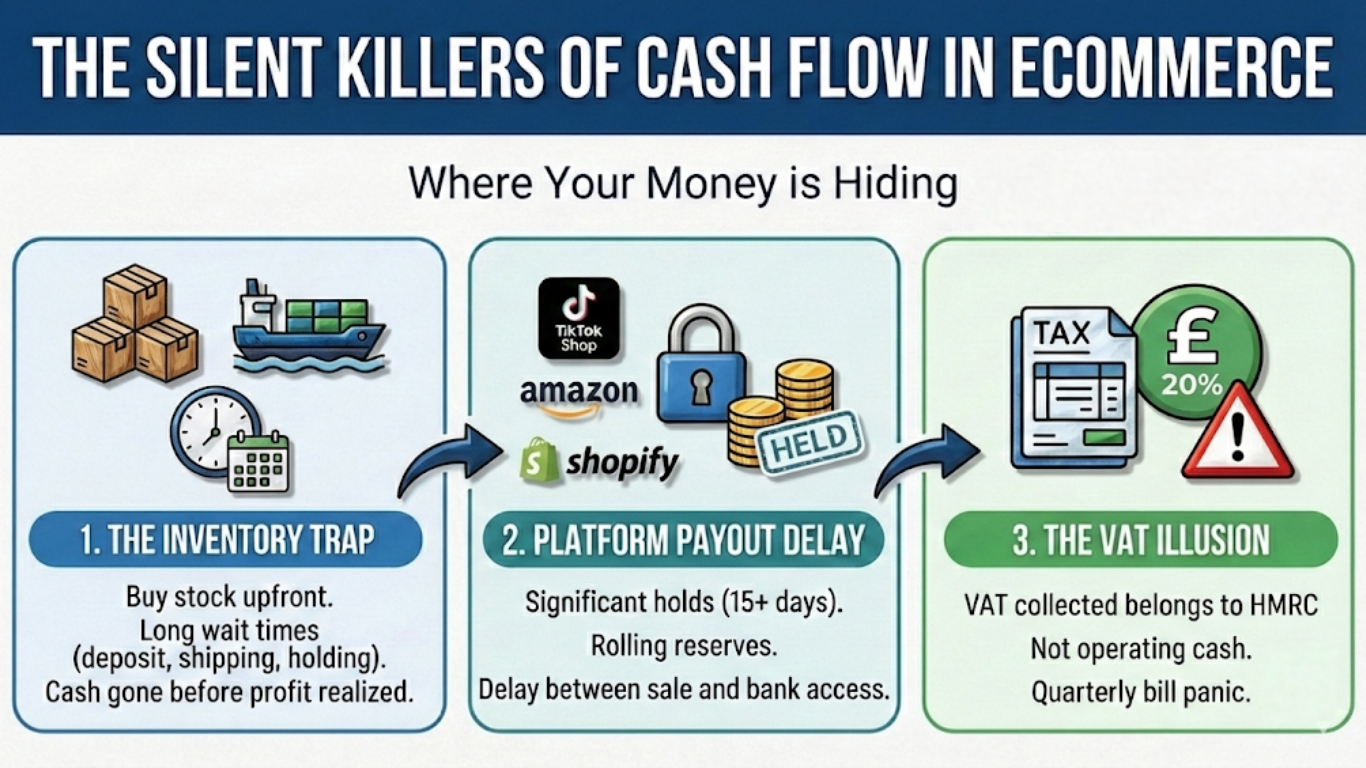
Why does this happen specifically to sellers? Unlike a service business that might get paid upfront, ecommerce is capital intensive. Here is where your money is hiding.
1. The Inventory Trap
You have to buy stock before you can sell it. If you are importing from China, you might pay a 30% deposit today, pay the balance in 30 days, wait another 30 days for shipping, and then hold the stock for two months before it sells. That is months where your cash is gone, but the profit hasn't been realised yet.
2. The Platform Payout Delay
This is the big one for modern sellers.
- TikTok Shop: They can hold funds for significant periods (often 15+ days after delivery) to cover potential returns.
- Amazon: The dreaded "rolling reserve" means Amazon holds a chunk of your money back to cover claims.
- Shopify Payments: Faster, but still a delay between the customer tapping their card and the money hitting your high street bank account.
3. The VAT Illusion
When cash does hit your account, remember that 20% of that (if you are VAT registered) belongs to HMRC. Many sellers mistakenly treat VAT collected as operating cash, only to panic when the quarterly bill lands.
The Seller & Channel Struggle: When Tech Lets You Down
If you are an online seller, seller, or channel running a high-volume business, the Cash Gap is complicated by a lack of infrastructure.
Let’s be honest: The integration software for online sellers and sellers doesn't really exist yet.
While Shopify sellers have A2X or Link My Books to sync data seamlessly, online sellers relying on channel payouts often face a data black hole. You might have ten different income streams—brand deals, TikTok channel fees, Amazon Online seller payouts—all landing on different dates with different payment terms.
Because these platforms don't sync nicely with standard accounting software yet, tracking exactly what you are owed versus what you have received is a manual nightmare. This invisibility makes the cash gap dangerous because you can’t easily forecast when your next "paycheck" is actually landing.
How to Calculate Your Cash Gap
To fix it, you need to measure it. As an ecommerce accountant helping brands scale, we use this basic formula to see the health of a business:
Cash Gap (in days) = Days in Inventory + Days Sales Outstanding - Days Payable Outstanding
- Days in Inventory: How long does stock sit on your shelf?
- Days Sales Outstanding: How long does TikTok/Amazon take to pay you?
- Days Payable Outstanding: How long do you take to pay your suppliers?
If your supplier wants paying in 30 days, but it takes you 90 days to sell the stock and get the payout, you have a 60-day cash gap. You need enough cash in the bank to survive those 60 days without income.
Strategies to Close the Gap
You don't just have to accept this. Here is how we help clients tighten that gap.
Negotiate Supplier Terms
If you have a good relationship with your suppliers, move from paying upfront to Net 30 or Net 60 terms. If you can sell the goods before you have to pay for them, you have a "negative cash gap"—which is the holy grail of ecommerce.
Short-Term Financing
Sometimes you need a bridge. Revenue-based financing (like Wayflyer or unexpected Shopify Capital offers) can help buy stock. However, be careful. The fees can be high. Only use this if the margin on the product you are buying significantly outweighs the cost of the capital.
Accurate Forecasting
You cannot run a six or seven-figure ecommerce brand on "gut feeling." You need a 13-week cash flow forecast. This predicts exactly when cash leaves and enters your account, highlighting the "danger zones" weeks before they happen so you can prepare.
Why You Need a Specialist Ecommerce Accountant
Generalist accountants often don't understand the nuances of platform holds, ad spend verification, or the specific nightmare of reconciling TikTok Shop channel income without proper integration tools.
If you are looking for the best accountant for ecommerce business England has to offer, you need a partner who understands the difference between a P&L and a cash flow statement.
At Social Commerce Accountants, we don’t just file taxes. We help you map out your cash flow so you can stop stressing about the bank balance and start focusing on growth. We understand the specific pain points of D2C and seller economies because we live them every day.
Don't let the Cash Gap kill your business.